Pain Management
Customized Medication Options for Pain Management
What Is Pain Management Compounding?
Pain management compounding is the process of preparing customized medications for patients experiencing pain or discomfort. These medications are prepared by a compounding pharmacist based on a valid prescription from a licensed healthcare provider.
Compounding may allow us to:
Adjust medication strength
Combine compatible ingredients into one formulation when prescribed
Create alternative dosage forms
Prepare topical medications for localized application
Remove unnecessary ingredients when appropriate
Customize formulations for specific patient needs
This flexibility can be helpful for patients who have difficulty with standard medications, need a different delivery method, or require a formulation tailored to a particular type of pain.
Why Customized Pain Medications May Be Helpful
Compounded pain medications may offer practical options such as:
Topical creams or gels applied directly to a specific area
Customized strengths based on the prescriber’s directions
Combination preparations when appropriate
Alternative dosage forms for patients who have difficulty swallowing pills
Localized application options for muscle, joint, or nerve-related discomfort
Medication Classes Commonly Used in Compounded Pain Medications
Town Total Compounding Center works with prescribers to prepare customized formulations using a variety of medication classes, depending on the patient’s needs.
Common medication classes may include
NSAIDs, such as ibuprofen, ketoprofen, or diclofenac
Nerve pain modifiers, such as gabapentin, amitriptyline, or clonidine
Muscle relaxants, such as cyclobenzaprine or baclofen
Topical anesthetics, such as lidocaine, benzocaine, or tetracaine
Corticosteroids, such as hydrocortisone, dexamethasone, or triamcinolone
All formulations are prepared according to the prescriber’s instructions.
Delivery Forms for Compounded Pain Medications
Possible dosage forms include:
Topical creams
Topical gels
Ointments
Solutions
Capsules
Dissolving sublingual troches
Suppositories
Topical creams and gels are often used when a provider wants medication applied to a specific area, while other dosage forms may be selected based on the patient’s condition, tolerance, and care plan.
Compounding for Specific Pain Concerns
Town Total Compounding Center can work with prescribers on customized medication options for a variety of pain-related needs.
Arthritis & Joint Pain
Arthritis-related pain may involve joint stiffness, swelling, or discomfort. Compounded topical formulations may include anti-inflammatory or analgesic ingredients when prescribed.
Back Pain
Back pain can have several causes, including muscle strain, nerve-related discomfort, or structural concerns. Compounded medications may be customized based on the type and location of pain.
Nerve Pain
Nerve pain may feel different from other types of pain and may require a different medication approach. Compounded formulations can include ingredients commonly used for nerve-related discomfort, as directed by a provider.
Muscle Pain & Spasms
Muscle-related pain may be associated with tension, strain, injury, or spasms. Customized formulations may include muscle relaxant ingredients when appropriate.
Headaches & Migraines
For patients who need a customized approach to headache or migraine management, prescribers may consider compounded options based on the patient’s individual needs and medication history.
Fibromyalgia
Fibromyalgia can involve widespread discomfort, muscle tenderness, sleep disruption, and other symptoms. Compounded formulations may be customized to support a provider-directed care plan. Low dose naltrexone may also be considered as part of a treatment plan for fibromyalgia.
Post-Procedure or Post-Surgical Pain
Following a procedure or surgery, providers may consider compounded medications as part of a short-term pain management plan.
Featured Products
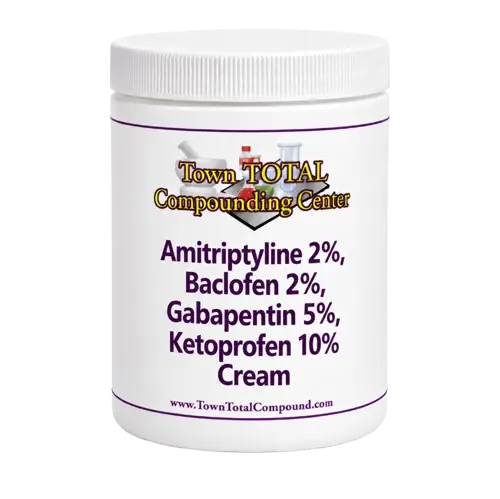
Amitriptyline
Amitriptyline 2%
Baclofen 2%
Gabapentin 5%
Ketoprofen 10%
Cream

Baclofen
Baclofen 2%
Ketoprofen 5%
Gabapentin 6%
Lidocaine 10%
Cream
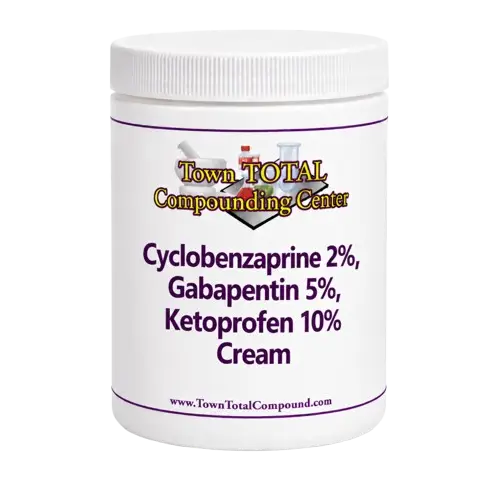
Cyclobenzaprine
Cyclobenzaprine 2%
Gabapentin 5%
Ketoprofen 10%
Cream
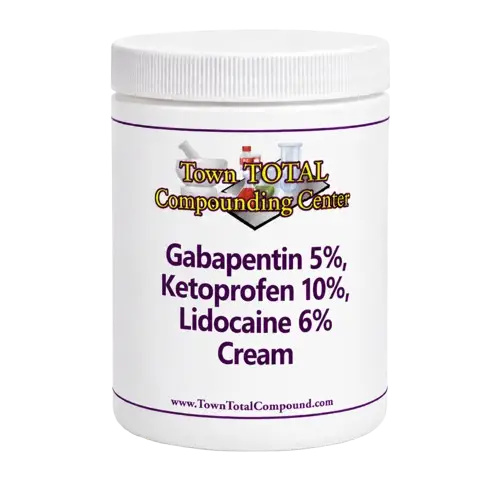
Gabapentin
Gabapentin 5%
Ketoprofen 10%
Lidocaine 6%
Cream
Podiatry Compounding for Foot & Ankle Concerns
Just as a shoe should fit your foot correctly, medications for foot and ankle concerns may need to be tailored to the patient.
Town Total Compounding Center works with podiatrists and other healthcare providers to prepare customized medications for foot and ankle-related conditions.
Podiatry compounding may be considered for concerns such as:
Foot or ankle pain
Swelling
Poor circulation-related concerns
Corns and calluses
Athlete’s foot
Fungal nail concerns
Skin irritation
Inflammation
Neuropathy-related discomfort or numbness
Medication forms may include creams, gels, solutions, or ointments, depending on the prescription and the patient’s unique needs.
Topical Pain Creams & Gels
Topical pain medications are applied directly to the skin over the affected area. These preparations may be useful when a prescriber wants to target a specific location, such as a joint, muscle, foot, ankle, or area of nerve-related discomfort.
Topical formulations may help reduce the need for multiple oral medications in some treatment plans, depending on the provider’s recommendations.
A Collaborative Approach to Pain Management
Pain Management Compounding FAQs
Talk with Town Total Compounding Center
If you or your patient is struggling with a standard pain medication or needs a more customized option, Town Total Compounding Center can help.
Our pharmacy team works with prescribers to prepare personalized pain management medications based on each patient’s specific needs.
Contact us today to learn more about pain management compounding or to discuss a prescription with our pharmacy team.